Professional Articles

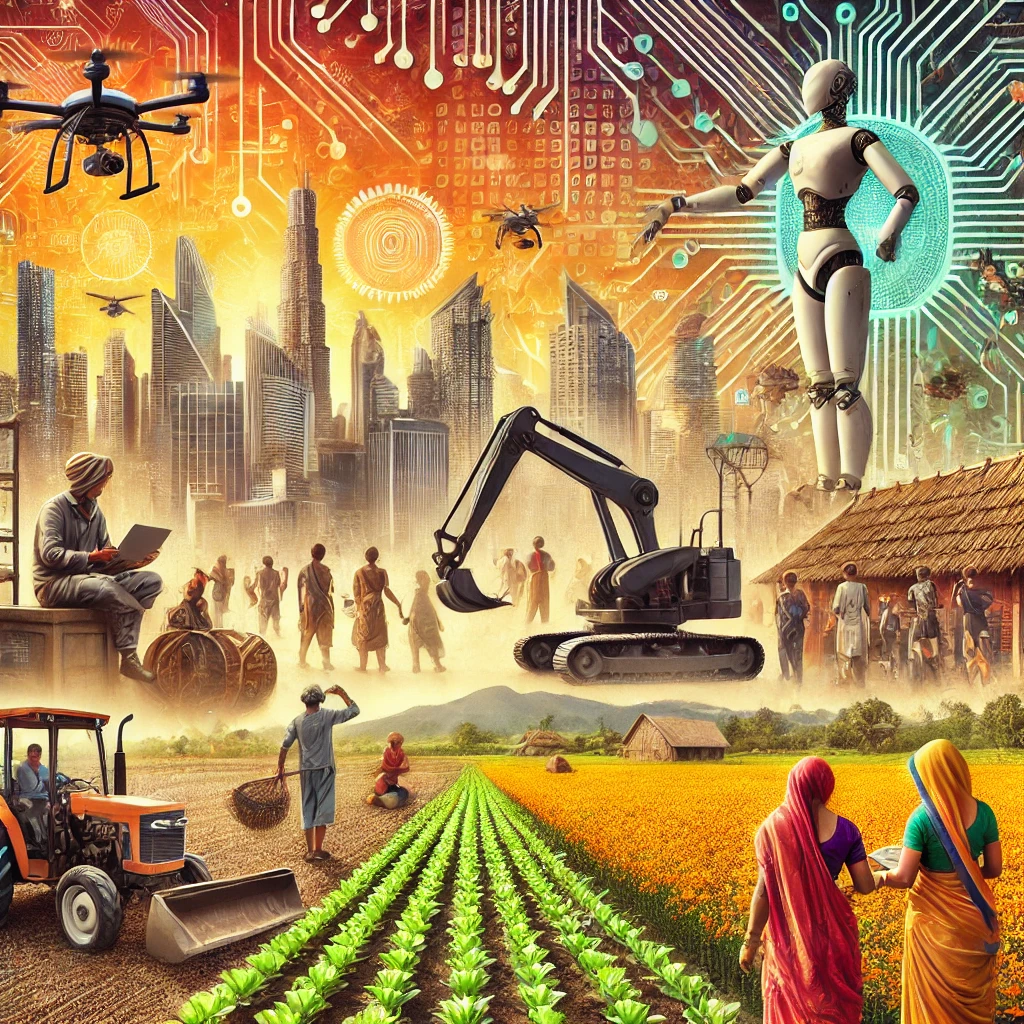
Impact of AI and Automation on India’s Labor Market

Introduction

The advent of Artificial Intelligence (AI) and automation has transformed industries worldwide, and India is no exception. As a country with a diverse and vibrant labor market, India faces unique challenges and opportunities in navigating this transformation. With a workforce of over 500 million people, India’s economy is heavily reliant on labor-intensive sectors such as agriculture, manufacturing, and services. The integration of AI and automation into these sectors promises to drive efficiency and innovation but also raises concerns about job displacement, income inequality, and skill gaps. This article explores the multifaceted impact of AI and automation on India’s labor market, focusing on key sectors, potential job disruptions, reskilling imperatives, and the broader implications for economic growth and societal well-being.

The Scope of AI and Automation in India

AI and automation encompass a range of technologies, including robotics, machine learning, natural language processing, and intelligent process automation. These technologies have begun to permeate various sectors of the Indian economy:

  • Manufacturing: Industrial robotics, predictive maintenance, and quality control automation.
  • Services: Chatbots, virtual assistants, and data analytics for customer service and finance.
  • Healthcare: AI-powered diagnostic tools, robotic surgeries, and telemedicine platforms.
  • Agriculture: Precision farming, automated irrigation, and AI-driven weather forecasting.

The widespread adoption of these technologies is fueled by India’s growing digital infrastructure, supportive government policies like “Digital India” and “Make in India,” and the increasing availability of affordable AI solutions.

Job Creation vs. Job Displacement

AI and automation are expected to both create and displace jobs, with the balance depending on the speed of adoption and the adaptability of the workforce.

  • Job Displacement: Routine and repetitive tasks in industries such as manufacturing, retail, and logistics are highly susceptible to automation. For example, assembly-line workers and cashiers may find their roles increasingly automated.
  • Job Creation: On the flip side, AI is generating new roles in areas like AI development, data analysis, and machine learning. Moreover, industries such as e-commerce and IT services are expanding, creating demand for tech-savvy professionals.

A report by the World Economic Forum predicts that while AI may displace 85 million jobs globally by 2025, it could also create 97 million new roles, emphasizing the importance of reskilling.

Sector-Wise Analysis

Agriculture

Agriculture employs nearly 40% of India’s workforce but contributes less than 20% to GDP. Automation in agriculture, through technologies like AI-based pest control, soil monitoring, and drone-based crop management, can enhance productivity and reduce reliance on manual labor. However, this transition may displace unskilled workers unless complemented by reskilling initiatives.

Manufacturing

The manufacturing sector, a cornerstone of India’s industrial growth, is rapidly adopting automation. Smart factories powered by the Internet of Things (IoT) and AI-driven robotics are improving efficiency. However, low-skilled jobs on assembly lines are at risk, highlighting the need to upskill workers for supervisory and technical roles.

IT and Services

India’s IT sector, a global leader in outsourcing, is at the forefront of AI innovation. Automation tools like robotic process automation (RPA) are streamlining back-office operations. While this may reduce the demand for entry-level roles, it creates opportunities for high-skilled professionals in AI development and cybersecurity.

Healthcare

The healthcare sector is leveraging AI to address challenges such as doctor shortages and uneven access to services. AI-powered diagnostics and telemedicine are expanding access to care, but they also necessitate training healthcare workers to use these tools effectively.

Impact on Workforce Demographics

The effects of AI and automation vary across different segments of the workforce:

  • Unskilled and Semi-Skilled Workers: These groups are most vulnerable to job displacement. For example, workers in logistics and retail may find themselves replaced by automated warehouses and self-checkout systems.
  • Skilled Professionals: While automation simplifies routine tasks, it also increases the demand for professionals with expertise in AI, data science, and machine learning.
  • Women in the Workforce: Automation could disproportionately affect women, particularly in sectors like garment manufacturing where they constitute a significant portion of the workforce.

The Role of Education and Reskilling

To mitigate job losses and leverage new opportunities, India must prioritize education and reskilling. Key strategies include:

  • STEM Education: Strengthening science, technology, engineering, and mathematics (STEM) education to prepare students for AI-driven industries.
  • Reskilling Initiatives: Government programs like Skill India must focus on training workers in emerging fields such as AI, data analytics, and robotics.
  • Public-Private Partnerships: Collaboration between the government, industry, and academia can accelerate the development of relevant skill programs.

Policy Implications

Policymakers play a critical role in managing the transition to an AI-driven economy. Key measures include:

  • Labor Market Reforms: Introducing policies to support gig and contract workers who may dominate the future labor market.
  • Incentives for Reskilling: Tax incentives for companies investing in employee training and reskilling.
  • Social Safety Nets: Strengthening unemployment benefits and introducing universal basic income (UBI) to support displaced workers.

Ethical and Societal Considerations

The adoption of AI and automation also raises ethical concerns, including:

  • Bias in AI Systems: Ensuring AI algorithms are unbiased and inclusive.
  • Data Privacy: Protecting workers' and consumers' data from misuse.
  • Digital Divide: Bridging the gap between urban and rural areas in accessing AI technologies.

The Road Ahead

The future of AI and automation in India’s labor market hinges on several factors:

  • Adoption Speed: The pace of AI adoption will determine the extent of disruption and the time available for adaptation.
  • Global Trends: India's labor market will be influenced by global trends in technology and trade.
  • Government and Industry Collaboration: A coordinated approach is essential to balance job creation and displacement.

Conclusion

AI and automation present a paradox for India’s labor market: they are both a source of disruption and an engine for growth. By proactively addressing the challenges of job displacement, skill gaps, and inequality, India can harness the potential of these technologies to drive economic development and improve quality of life. The key lies in fostering a culture of lifelong learning, investing in human capital, and ensuring that the benefits of AI are shared equitably across society.


Appreciation

0

Subscribe
Notify of
guest
0 Comments
Oldest
Newest Most Voted

Latest News And Updates