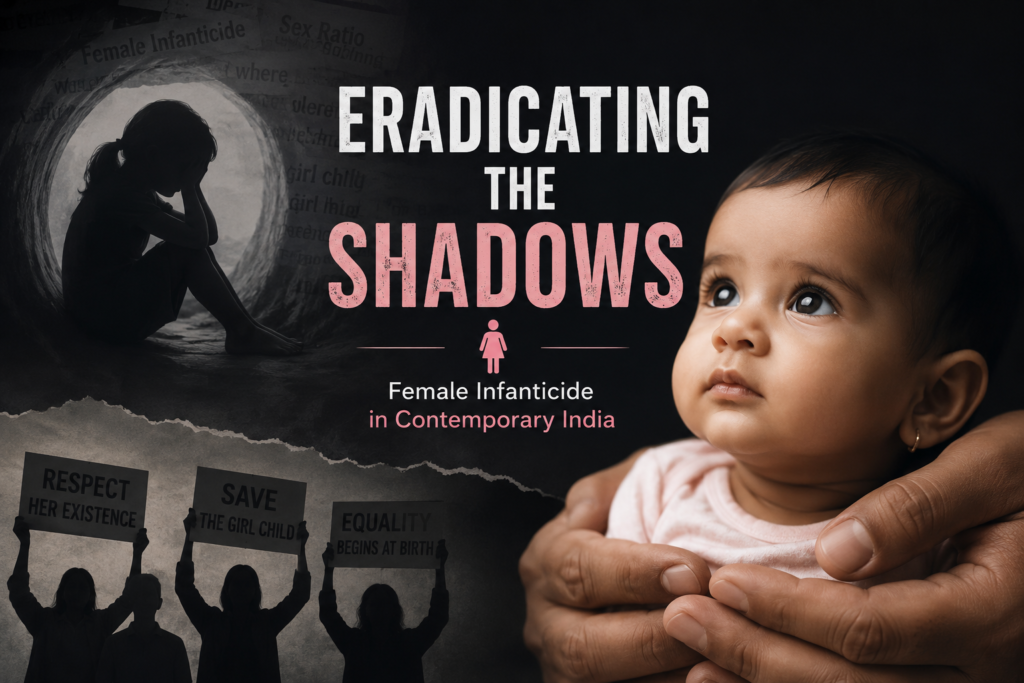

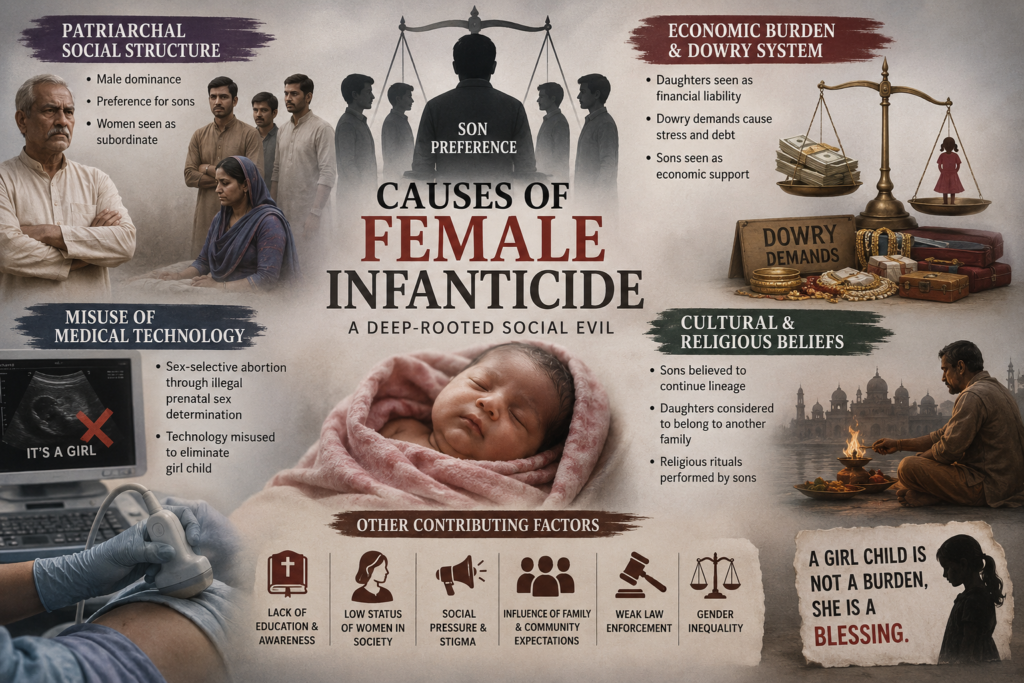
Female infanticide in India is not the result of a single factor but emerges from the interaction of social, economic, cultural, and technological forces operating within a deeply patriarchal framework. These causes reinforce one another, creating conditions in which the birth of a female child is perceived as undesirable. Despite modernization, legal reforms, and economic growth, traditional attitudes toward gender continue to influence reproductive choices, leading to the persistence of female infanticide and sex-selective practices across various regions of the country.
1. Patriarchal Social Structure
The patriarchal organization of Indian society remains the most fundamental cause of female infanticide. Patriarchy assigns greater social, economic, and symbolic value to male children, while female children are often considered subordinate and dependent. Sons are viewed as carriers of the family lineage, performers of essential religious rituals, and primary providers of economic and emotional support to parents in old age. In contrast, daughters are expected to marry into another family, limiting their perceived contribution to their natal household.
This unequal valuation of children based on gender creates a social environment in which the birth of a son is celebrated, while the birth of a daughter may be met with disappointment or even rejection. Such attitudes are reinforced through socialization processes, family expectations, and community norms, making gender discrimination appear natural and socially acceptable. As a result, families may resort to extreme measures, including female infanticide, to conform to patriarchal ideals and avoid social stigma.
2. Economic Burden and the Dowry System
Economic considerations play a crucial role in sustaining the practice of female infanticide. The dowry system, despite being legally prohibited, continues to exert significant influence over family decisions regarding childbirth. Daughters are often perceived as financial liabilities due to the expectation of providing dowry at the time of marriage, which can impose severe economic strain on families, particularly those from lower and middle socio-economic backgrounds.
In contrast, sons are viewed as economic assets who will contribute to household income and support parents in old age. This cost–benefit perception of children leads families to prefer sons and avoid the perceived long-term financial burden associated with daughters. Empirical studies indicate that households facing economic insecurity or indebtedness are more likely to engage in sex-selective practices or neglect female infants, thereby increasing the risk of female infanticide. Thus, economic vulnerability combined with dowry expectations reinforces gender bias and discriminatory reproductive behaviour.
3. Misuse of Medical Technology
The misuse of modern medical technology has transformed the nature of female infanticide in contemporary India. The availability of prenatal diagnostic techniques such as ultrasonography has made it possible to determine the sex of the feotus at an early stage of pregnancy. Although the Pre-Conception and Pre-Natal Diagnostic Techniques (PCPNDT) Act, 1994 prohibits sex determination and sex-selective abortion, illegal practices continue due to high demand, weak enforcement, and lack of accountability.
This technological shift has moved gender discrimination from overt post-birth infanticide to covert pre-birth elimination of female fetuses, making the practice less visible but more widespread. Medical professionals, diagnostic centers, and intermediaries often operate in collusion with families, undermining the effectiveness of legal safeguards. The commercialization of healthcare and ethical lapses within the medical profession have further aggravated the problem, demonstrating how technology, when misused, can reinforce existing social prejudices rather than challenge them.
4. Cultural and Religious Beliefs
Cultural and religious beliefs also play a significant role in sustaining female infanticide. In many communities, religious traditions emphasize the importance of having a male heir to perform last rites and ensure spiritual salvation of ancestors. Such beliefs elevate the social status of sons while marginalizing daughters, whose roles are often confined to domestic responsibilities.
Cultural norms related to honour, purity, and family reputation can lead to heightened control over female sexuality, making daughters appear as potential sources of social risk. These perceptions contribute to the belief that eliminating female children reduces future social and moral anxieties. Anthropological studies suggest that these cultural attitudes are deeply embedded and resistant to change, particularly when reinforced by community practices and inter-generational transmission of values. Consequently, cultural and religious beliefs continue to legitimize gender discrimination and hinder efforts to eradicate female infanticide.
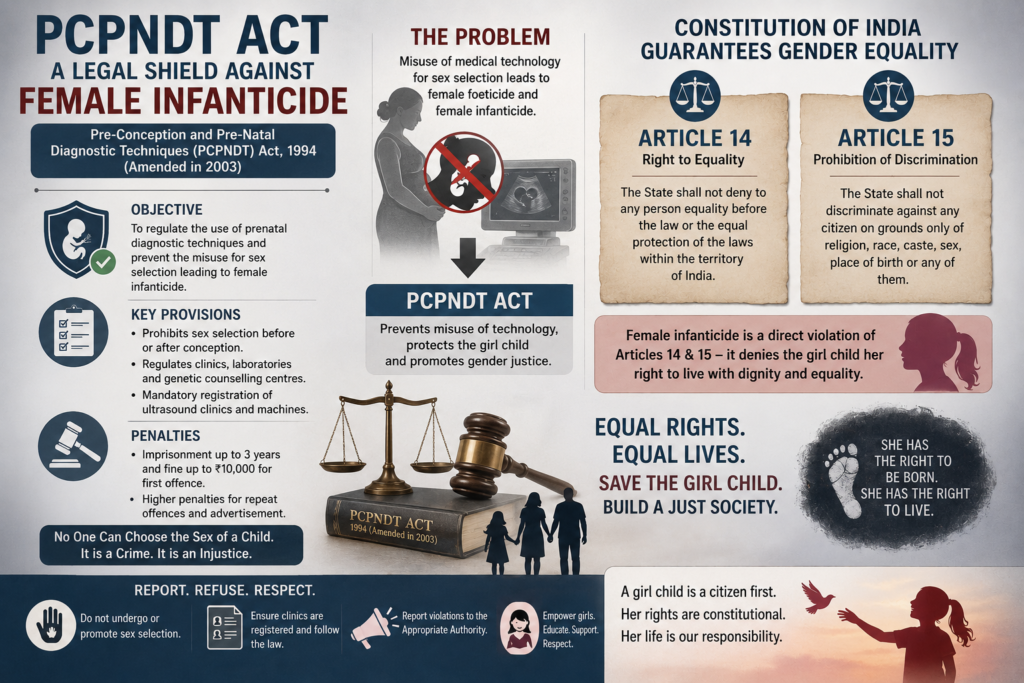
1. PCPNDT Act, 1994
The Pre-Conception and Pre-Natal Diagnostic Techniques (PCPNDT) Act, 1994 was enacted to prevent sex selection and regulate diagnostic technologies. The Act prohibits sex determination before and after conception and prescribes penalties for violations.
Several Scholars argue that inadequate monitoring, corruption, and low conviction rates have weakened the Act’s effectiveness. Although amendments have strengthened enforcement mechanisms, implementation challenges persist.
2. Constitutional and Penal Provisions
Articles 14 and 15 of the Indian Constitution guarantee equality and prohibit gender discrimination. Additionally, provisions under the Indian Penal Code criminalize infanticide and related offences .

The Indian government has adopted multiple policy measures to address female infanticide, recognizing its far-reaching social and demographic consequences. One of the most prominent initiatives is the Beti Bachao Beti Padhao (BBBP) scheme launched in 2015, aimed at improving the child sex ratio and promoting education and empowerment of girls. While the scheme has enhanced awareness, evaluation reports indicate that much of the funding has been allocated to publicity rather than sustained grassroots interventions. Such initiatives, the consequences of female infanticide remain severe. A skewed sex ratio leads to long-term demographic imbalance, particularly affecting marriage patterns and increasing the risk of human trafficking and forced marriages. Societies with a deficit of women often experience higher levels of social instability and gender-based violence.
Education and awareness play a crucial role in combating female infanticide. Studies show that educated women are more likely to resist patriarchal norms and invest equally in their children regardless of gender. Community-based awareness programs involving local leaders, men, and youth have demonstrated positive changes in attitudes toward the value of daughters. However, scholars emphasize that awareness campaigns must be sustained and culturally sensitive to produce lasting behavioural change.